


John Phelan’s Departure as Navy Secretary: A Sudden End to a Turbulent Tenure
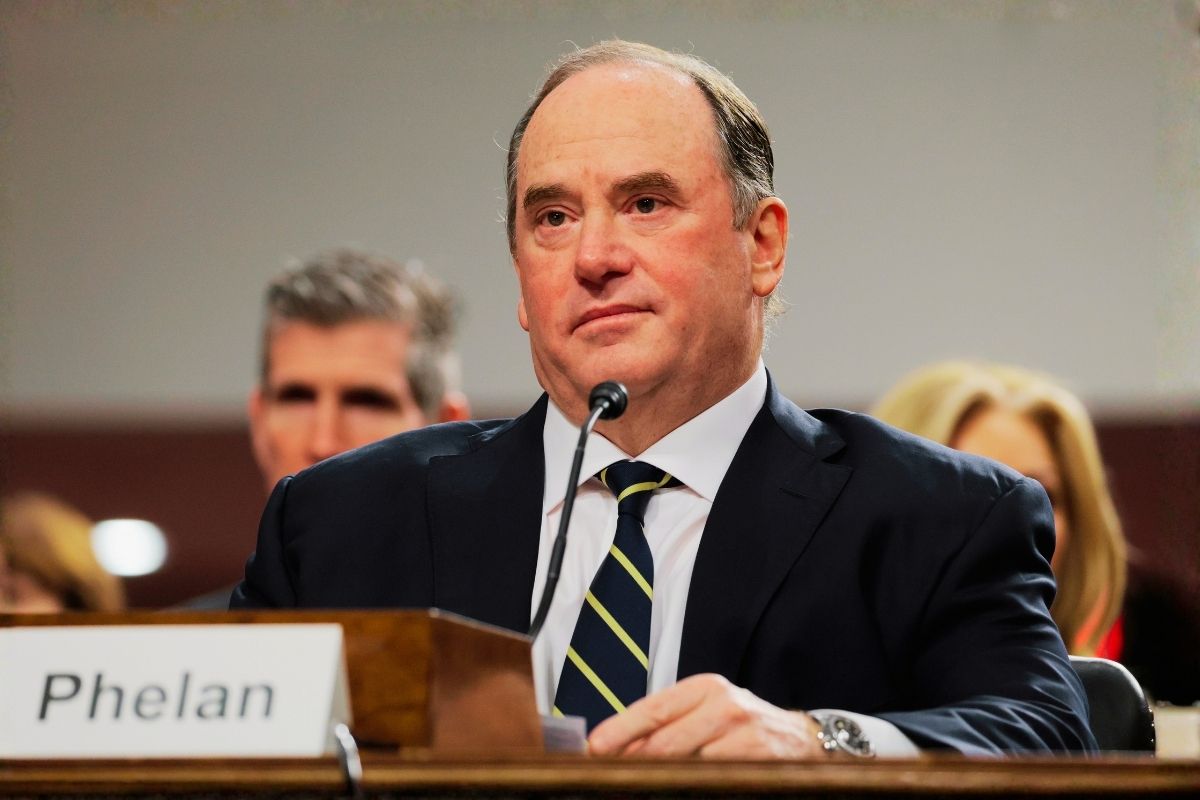
One of the most dramatic upheavals witnessed in recent times by the Pentagon took place recently when John Phelan, the Secretary of the Navy, was dismissed from his post on Wednesday, April 22, 2026, following a tenure in office that barely lasted over 13 months. This unprecedented act of dismissal created ripples in Washington, especially at a very delicate time when the U.S. Navy was blockading Iran’s ports in a ceasefire.
An Abrupt and Immediate Dismissal
Pentagon spokesman Sean Parnell announced Wednesday evening that Phelan would be departing “effective immediately” — a surprise announcement that came even while the U.S. Navy was carrying out a blockade of Iranian ports during a ceasefire in the Iran war.
Remarkably, Phelan had spent the greater part of the day on Capitol Hill discussing the nuts and bolts of shipbuilding and had no apparent idea he was about to be sacked. Adding to the shock, the sudden departure came just a day after Phelan had addressed a large crowd of sailors and industry professionals at the Navy’s annual Sea-Air-Space conference in Washington, D.C., and had spoken with reporters about his ongoing agenda.
According to multiple reports, three people familiar with the matter said Phelan did not know he was being fired until he saw the post on X from the Pentagon’s top spokesman announcing his departure.
The Core Reasons: Shipbuilding Tensions and Internal Power Struggles
The real story behind Phelan’s ouster is one of mounting internal friction. Multiple sources told CNN there was tension for months between Phelan and Hegseth, who believed Phelan was moving too slowly on implementing shipbuilding reforms and was also irked by Phelan’s direct communication with Trump, which Hegseth viewed as an attempt to bypass him.
Deputy Defense Secretary Steve Feinberg also wanted to take control of major responsibilities for shipbuilding and Navy acquisitions, a job that would typically be within Phelan’s purview.
The moment of crisis came during a White House meeting on shipbuilding. Trump, frustrated by slow shipbuilding progress himself, became convinced during the meeting that Phelan needed to be replaced, and he and his defense secretary resolved to install someone who would move more quickly. Trump told Hegseth to “take care of it.”
In addition, Phelan was reportedly under an ethics investigation, which may have weakened his standing in the administration.
Phelan’s Background and Brief Tenure
Phelan is a businessman with no prior military service; he and his wife previously fundraised millions of dollars for Trump’s campaign before he was confirmed as Navy secretary in 2025. According to his Department of the Navy biography, Phelan was founder and chairman of Rugger Management, a private investment firm based in Palm Beach, Florida. Before launching Rugger, he was a co-founder and co-managing partner of MSD Capital, a private investment firm for Michael Dell, and MSD Partners, which managed investments for third-party investors.
The Senate confirmed Phelan as Navy Secretary in a 62-30 vote in March 2025. He was the first departure among the military service secretaries nominated under Trump.
Congressional Reaction
Lawmakers were caught off guard. Sen. Jack Reed, D-R.I., the ranking member of the Senate Armed Services Committee, expressed concern about the firing, saying: “Secretary Phelan’s abrupt dismissal is troubling. I am concerned it is yet another example of the instability and dysfunction that have come to define the Department of Defense under President Trump and Secretary Hegseth.”
Trump’s Unusual Post-Firing Praise
Despite orchestrating the dismissal, nearly a full day after Phelan had been ousted, Trump praised his former Navy secretary and suggested he’d like him to return to the administration at some point, writing on Truth Social: “John Phelan is a long-time friend, and very successful businessman, who did an outstanding job serving as my Secretary of the Navy for the last year.” Trump added that he “would certainly like to have him back within the Trump Administration sometime in the future.”
Who Steps In: Acting Secretary Hung Cao
Navy Undersecretary Hung Cao, a 25-year combat veteran who twice ran unsuccessfully for federal office in Virginia, will serve as acting secretary of the Navy. Cao was born on August 3, 1971, in Saigon, South Vietnam. In 1975, at age 4, he came to the United States with his family as refugees.
Cao now inherits a major agenda — and a Navy stretched thin across multiple theaters amid relentless Pentagon leadership upheaval. The latest leadership transition at the Navy comes at a pivotal time as the service advances major initiatives tied to maritime dominance and acquisition reform.
A Navy at War — and Under Scrutiny
The firing’s timing could not be more consequential. US forces have redirected 31 vessels to return to port and have also boarded two ships as part of the ongoing naval blockade of Iran. The Secretary of the Navy is the service’s top civilian official, responsible for training and equipping the Navy and Marine Corps — though not for running combat operations like those against Iran, which falls to regional commanders.
Phelan’s departure is the latest in a series of high-level defense removals under the Trump-Hegseth Pentagon — and it signals that the pressure to rapidly modernize and expand U.S. naval power is now the defining test for military leadership.